Products by Category

Traditional Moroccan Leather Making in Fes

1. Collecting the Animal Hides

The process begins with animal hides, traditionally from goats, sheep, cows, or camels. The hides are carefully collected and prepared before tanning.

2. Cleaning the Hides

The hides are washed and cleaned to remove dirt, blood, fat, and other unwanted materials. This preparation is important before the tanning process.

3. Traditional Soaking

The hides are placed in large traditional vats containing water and natural materials. This helps soften the hides and prepare them for the next stage.

4. Removing the Hair

Artisans remove the hair from the hides manually. Traditionally, natural materials such as lime are used to help loosen the hair.

5. Traditional Tanning

This is one of the most important stages. In traditional Fes tanneries, hides are treated using natural tanning materials, including plant-based ingredients, depending on the tanning method.

6. Natural Coloring

After tanning, the leather can be dyed in different colors. Traditional Moroccan artisans carefully work the leather to achieve rich and distinctive colors such as brown, yellow, red, orange, blue, and green.

7. Drying the Leather

The dyed leather is removed from the vats and placed in the sun to dry naturally. Artisans regularly handle and stretch the leather to improve its softness.

8. Softening and Preparing the Leather

Once dry, the leather is softened and treated to obtain the desired texture. Artisans stretch, scrape, and work the leather by hand.

9. Cutting the Leather

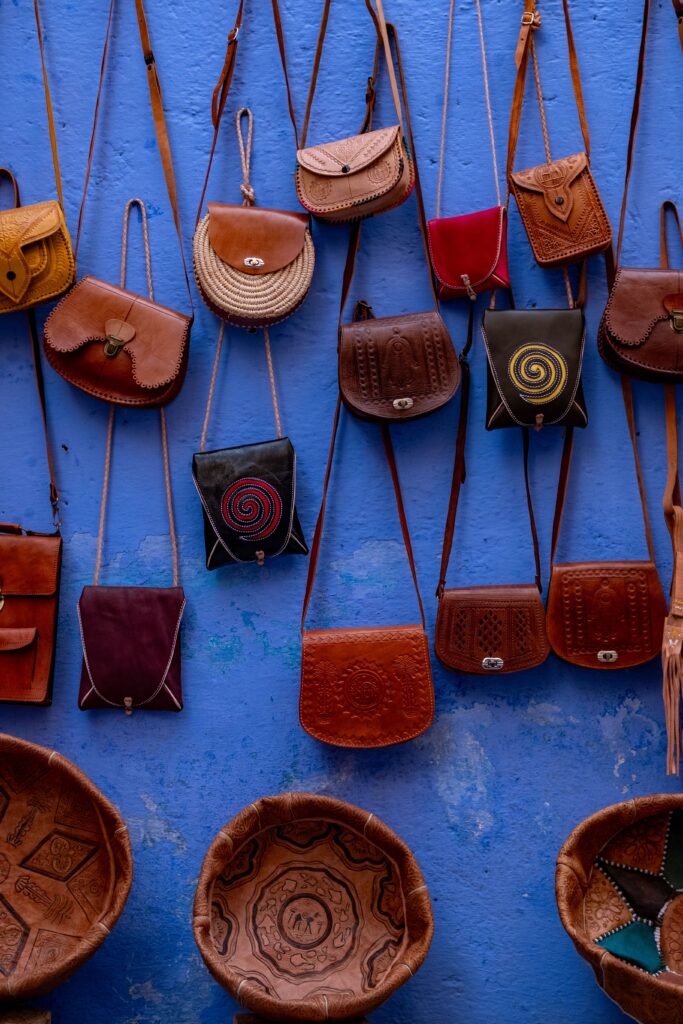
The prepared leather is measured and cut according to the product being created, such as bags, belts, babouches, wallets, poufs, jackets, and decorative items.

10. Handcrafting the Product

This is where the artisan’s skill becomes visible. Leather pieces are assembled, stitched, shaped, and decorated by hand.

11. Decoration and Finishing

Many Moroccan leather products are decorated with traditional patterns, stitching, embossing, and other handmade details.

12. Final Quality Check

Before the product is sold, the artisan checks the stitching, shape, color, strength, and overall finish.

From Fes to Your Home

Traditional Fes leather is more than a product—it represents generations of craftsmanship, patience, and Moroccan heritage. Each handmade piece carries the character and skill of the artisan who created it.